

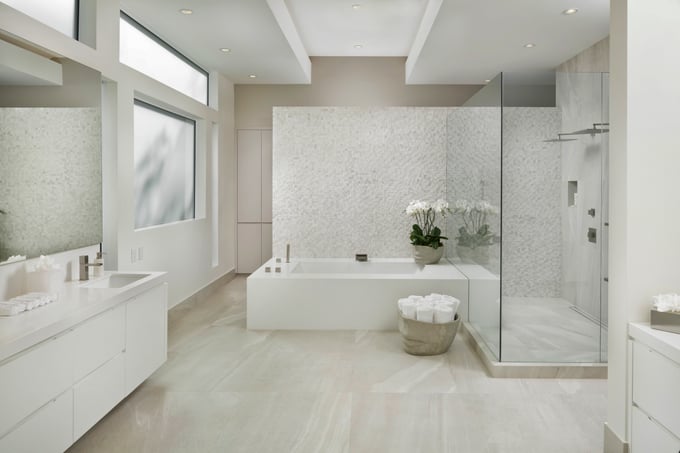
Choosing tile is an exciting and fun process, but with so many materials, finishes, and size options available, it’s easy to feel overwhelmed - not to mention all of the thoughtful decision-making that is needed to make sure your tile is installed correctly. A few common missteps can impact the look, performance, and longevity of your home’s design. The good news is that most of these missteps can be avoided by partnering with an experienced interior designer and a thoughtful, detail-oriented custom builder. Let’s take a look at the 7 most common tile mistakes and explore how to avoid them.
1. Not Considering Long-Term Maintenance Needs
Natural stone tile offers a luxurious and organic feel to your home (and it can last a lifetime!), but it does require upfront and regular sealing over the course of its life. So, it’s a good idea to think about where you’re putting it in your home and if you think it’s worth it. For instance, you may opt to use natural stone tile in your primary bath or even in a show-stopping powder bath, but you might want to pass on using it in a kids’ bathroom or mudroom. Those spaces are likely to get mistreated on a regular basis, and the upkeep required by natural stone may prove to be quite taxing after a while. Durable options like porcelain or even ceramic can deliver beauty without the same level of maintenance requirements.
On a similar note, be sure that the tile you’re selecting fits the bill for the exact purpose it will be serving. For example, using matte tiles as opposed to glossy ones can be safer for entryways and bathroom floors that require a higher level of slip-resistance. You could even consider a small-scale or mosaic tile that requires more grout lines, thereby increasing the friction and maximizing slip-resistance.
2. Overlooking Scale and Proportion
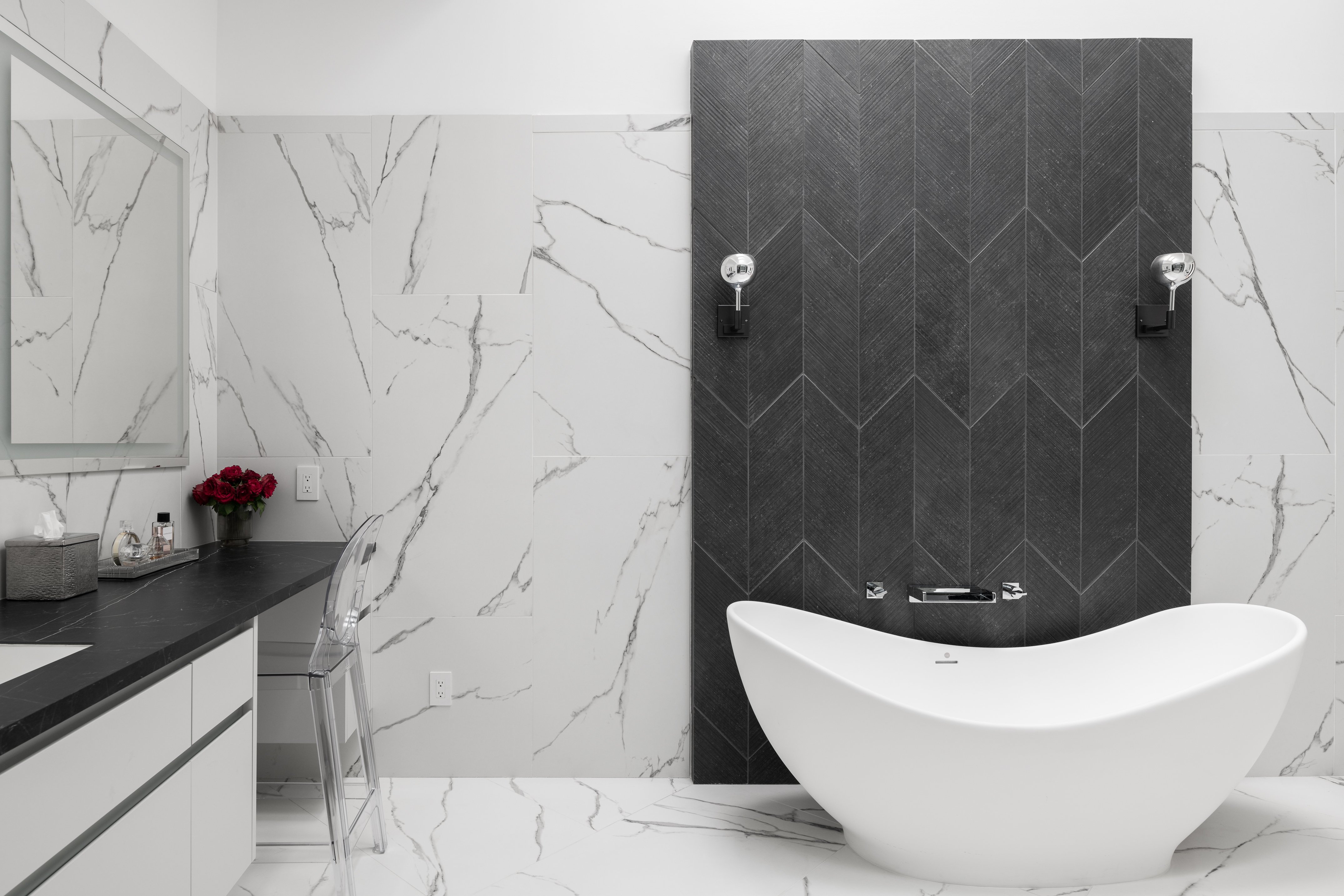
Popular large-format tile (think 24×48 in size) can elongate a space - unless the room is too small. Conversely, tiny mosaics in big rooms can become quite visually noisy. The key is to collaborate closely with your interior designer and custom builder to ensure that the scale of your tiles is proportional and appropriate for the size of the space where it is to be installed.
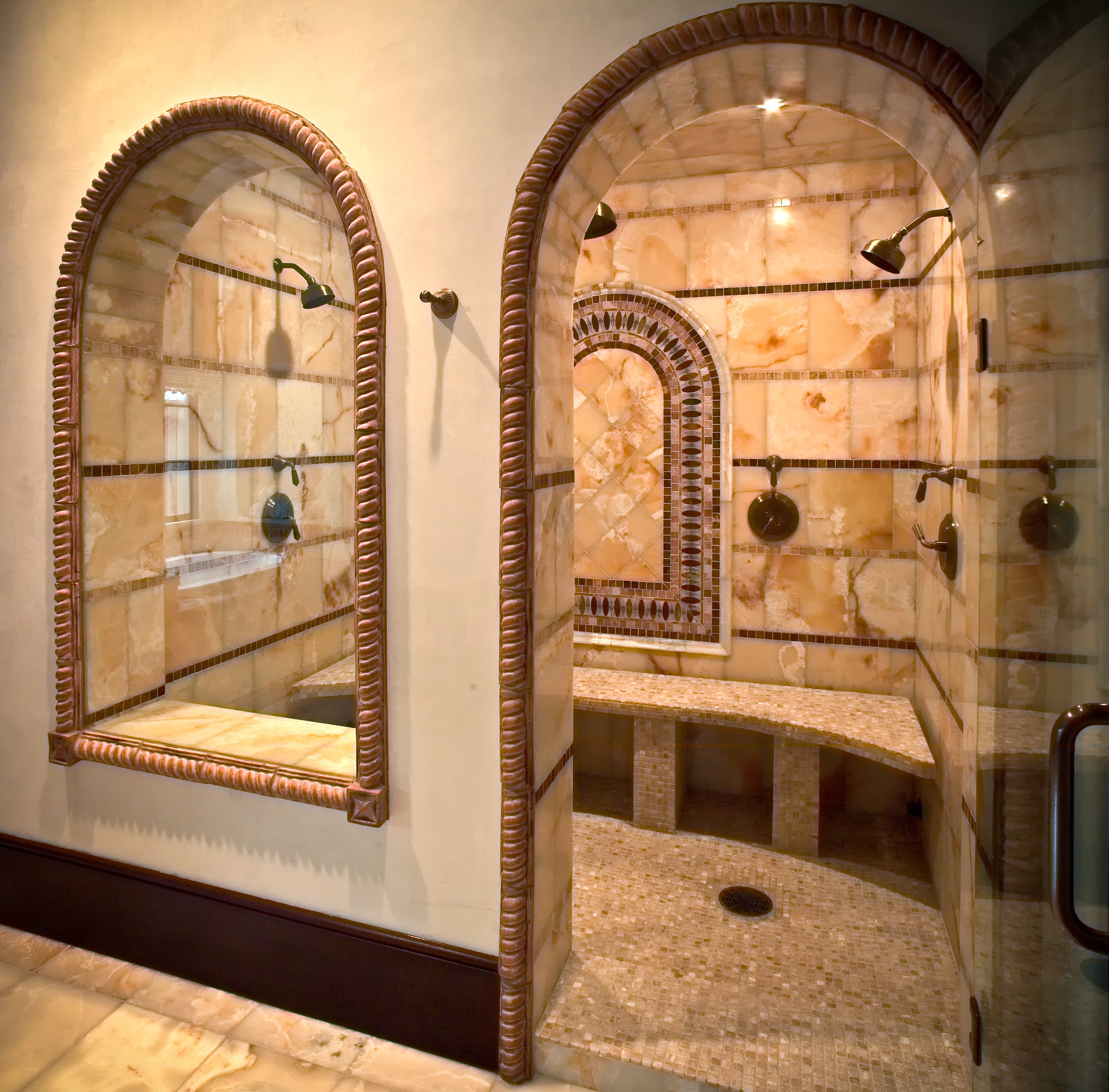
Another important note regarding scale: Don’t undersize your shampoo niches! These storage spaces are meant to be functional above all else, so be sure to design them to fit your exact haircare and skincare containers. Consider both height and depth, and also be sure that they can accommodate every item you’ll need stored in the shower. Ideally, you can avoid storing anything on the floor of your brand-new shower.
3. Not Planning for Edge Detailing Ahead of Time
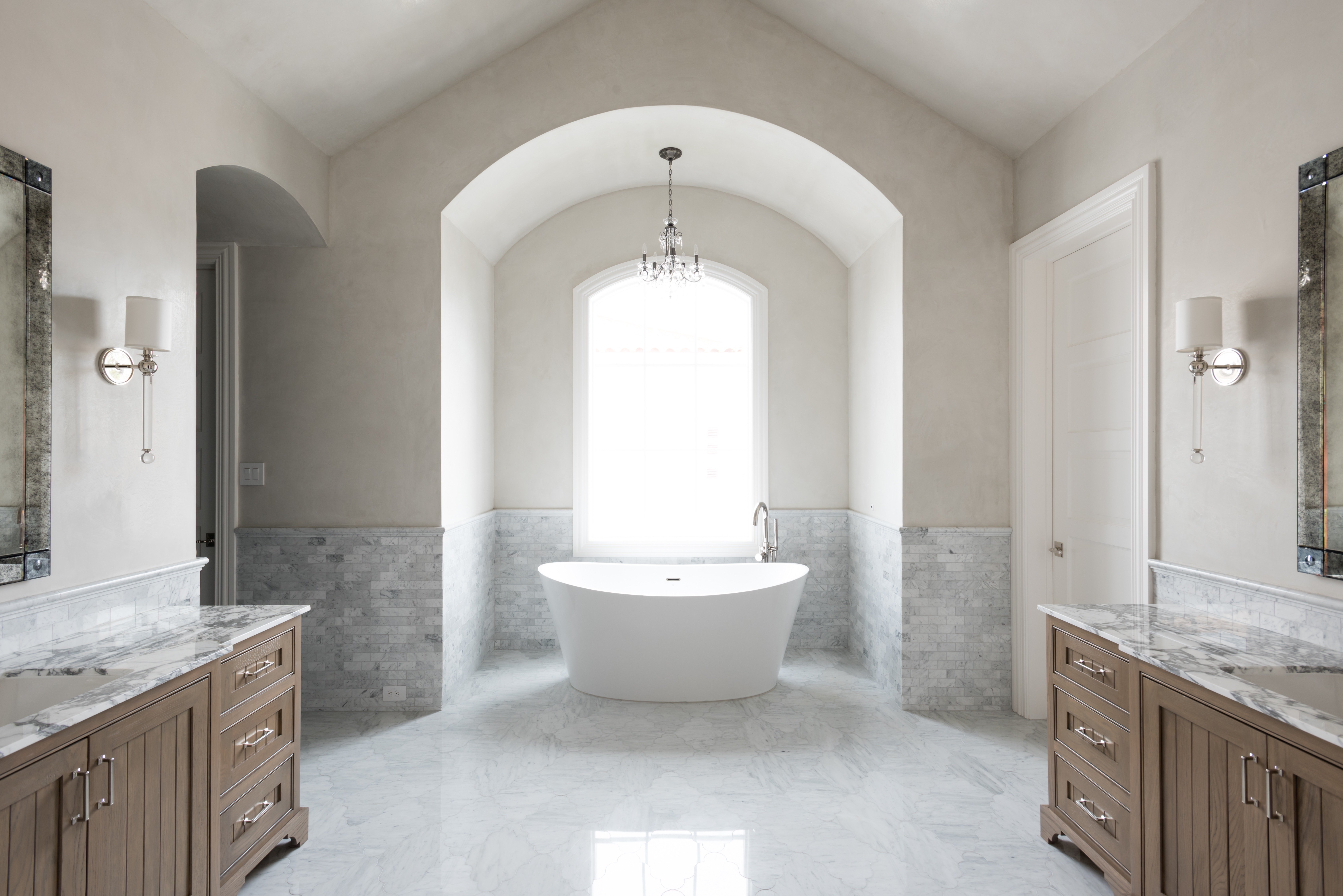
In our experience, this small detail can make the biggest difference in your tile installation. Your tile’s “edge detailing” (how it terminates into whatever material is immediately next to it) has such a huge impact on the overall look of your space.
You have to go into your tile selection process knowing what types of edge detailing you like the look of, and which ones you don’t. For example, we have many homeowners who do not like the look of Schluter trim. Instead, they want their tile edging to match their tile. If this is the case for you, make sure that ALL tiles you are considering can either be easily mitered without chipping OR have matching trim tiles in the style you like (i.e., Bullnose, pencil, V-cap, or chair rail).
The transition between your tile and adjacent materials (sheetrock, cabinetry, trim material, another tile, etc.) will matter to you when all is said and done, so be sure to give it the attention it deserves during the planning and selection stages.
4. Botching the Layout
We cannot stress this one enough. If you are working with a high-quality custom builder, there is absolutely no excuse for botching tile layout. In order to do it right, a significant amount of forethought and proactive planning must be utilized.
To illustrate, here is the process an experienced, detail-oriented builder should follow when approaching a tiled shower, for example:
- Locate the plumbing fixtures (including drains!) on paper AND in the framed shower space. (Don’t forget to accurately account for the buildup of the substrate or your mudbed AND the thickness of your tile so that you can achieve symmetry.)
- Use lasers to check for proper alignment – make sure everything is level AND plumb.
- Decide whether you’re tiling the ceiling or not. (Side note: if not, then be sure your shower will be ventilated properly, either with a bath fan or with a glass door that does NOT go all the way up to the ceiling.)
- Before you lay your first tile, pop lines and thoughtfully lay out the pattern on the wall/floors/ceiling. Your goal is to achieve symmetry and avoid awkward tile cuts that will be noticeable when the shower is finished.
- Be sure that plumbing fixtures are centered and that drains are in alignment with the shower valves. Everything should be thoughtfully located and not randomly placed.
This same proactive, methodical approach should be used for EVERY space where tile will be installed.
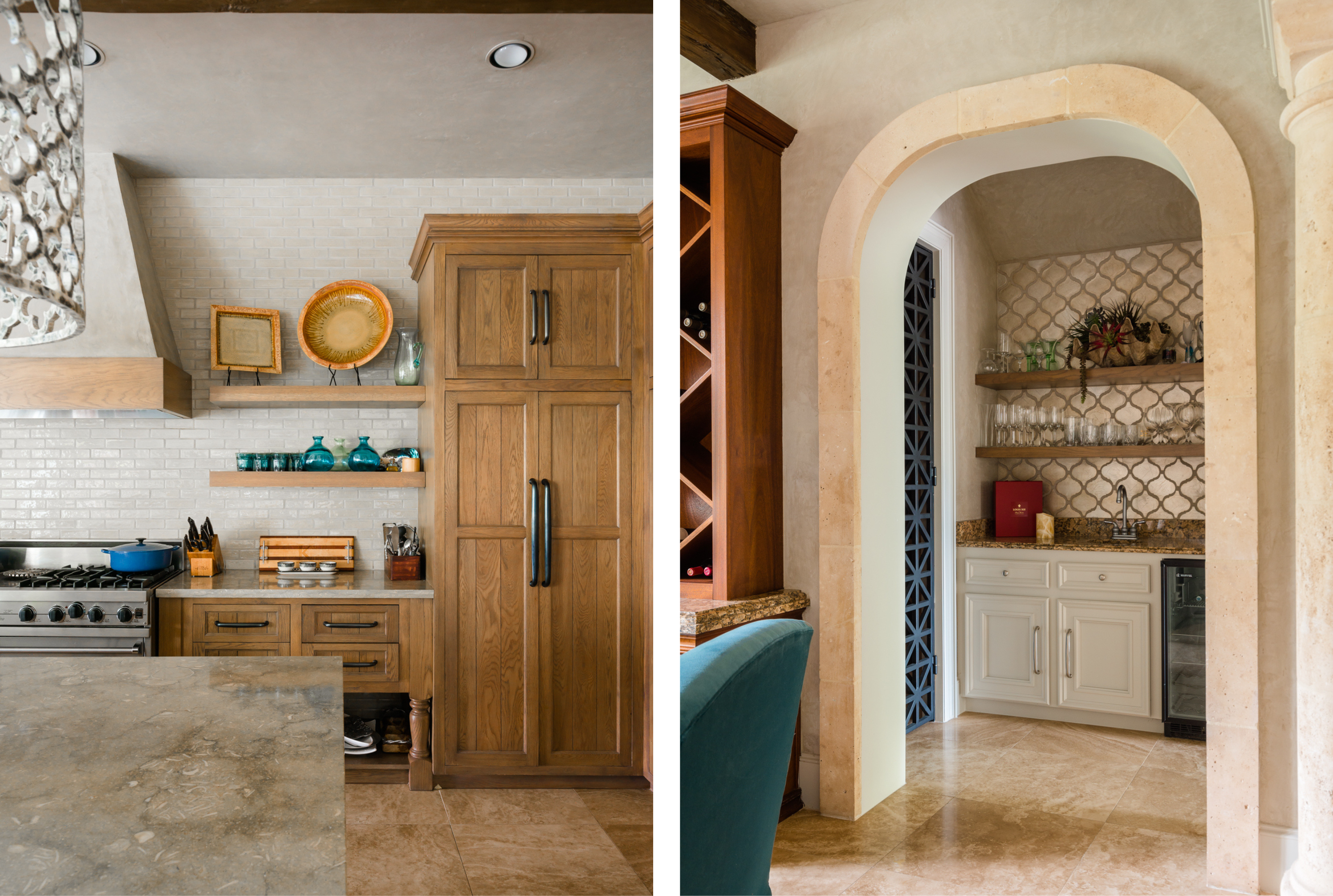
Beyond the granular level, take some time to decide which tile layout patterns you like for each space (i.e., Herringbone, running bond, horizontal/vertical stacked, chevron, crosshatch, etc.). Your interior designer will be very helpful in determining which pattern would be best, both when considering the design intent/aesthetic of each space, as well as considering the exact tile selection for each space.
Curious how to choose the right custom builder for you? Visit our previous blog post here.
5. Not Testing Samples in Your Home
If you’re doing a renovation on your home, bring tile samples to your house and look at them in the actual spaces where you want to use them. Lighting changes everything, so look at them in the exact locations and at the exact angles where they will be installed. Don’t forget to look at them multiple times throughout the day/evening as well.
If you’re building a new home, try to bring tile samples to spaces in your current home that have similar lighting, colors, and aesthetics as what you’re trying to achieve in your future space. The color, texture, and feeling that a tile gives off will change as you look at it over time, so give yourself a few days to “sit on it” before making your final tile selection, especially for any important space in your home.
6. Choosing the Wrong Grout Color or Thickness
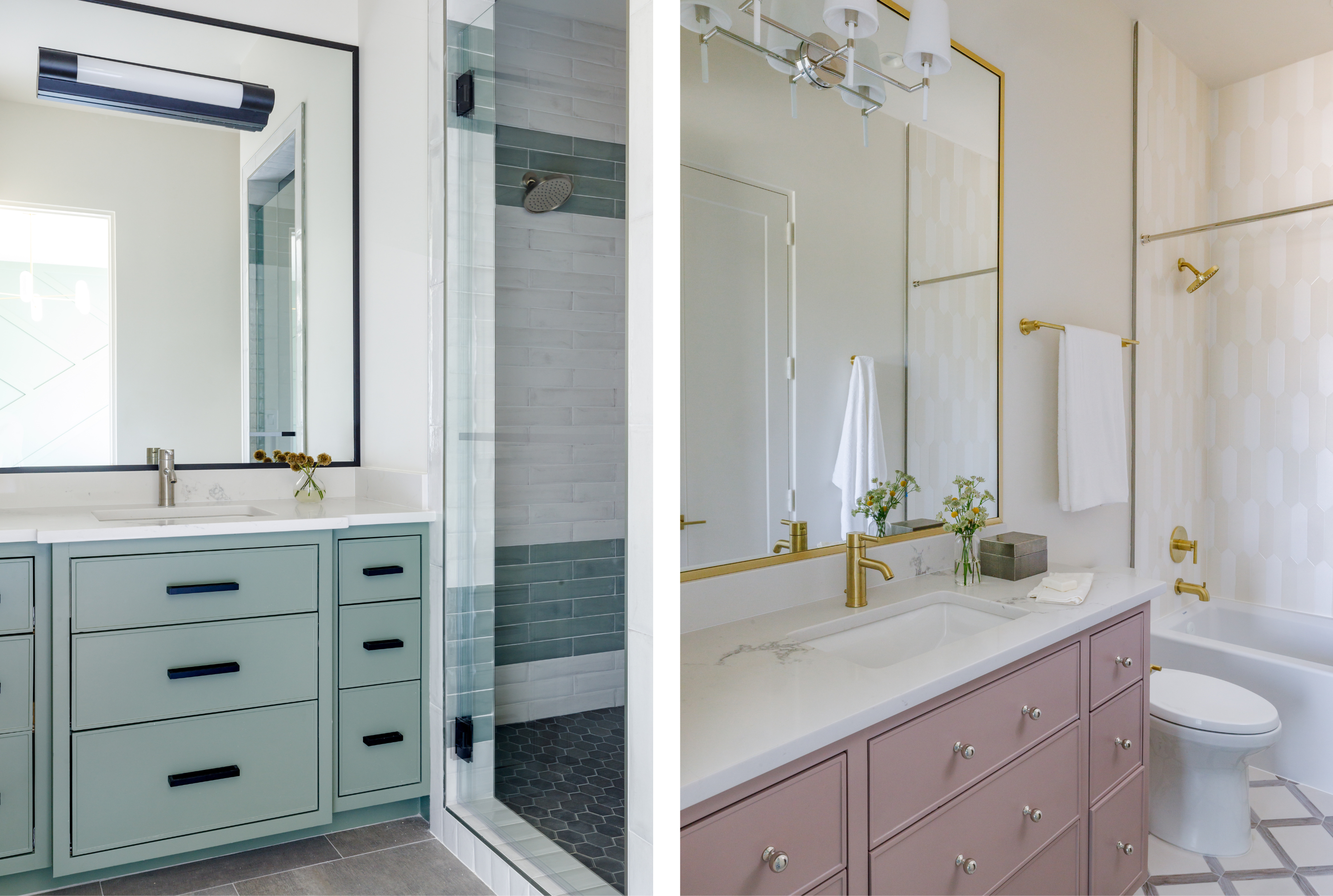
This is HUGE. Take your time when choosing the right grout color for your tile selection. Don’t be afraid to have your custom builder mock up a few sample boards with 2-3 colors you’re trying to choose between. Once you’ve selected the right color, have them do the same for grout thicknesses if you’re not totally sure what you’d like. Keep in mind that a grout color that matches/coordinates closely with your tile will create a seamless look and draw attention to the tile itself, while a contrasting grout color will highlight the tile PATTERN more than the tile itself. Again, lean on your interior designer for help with this. They are a wonderful resource during this process!
7. Not Ordering Enough Material
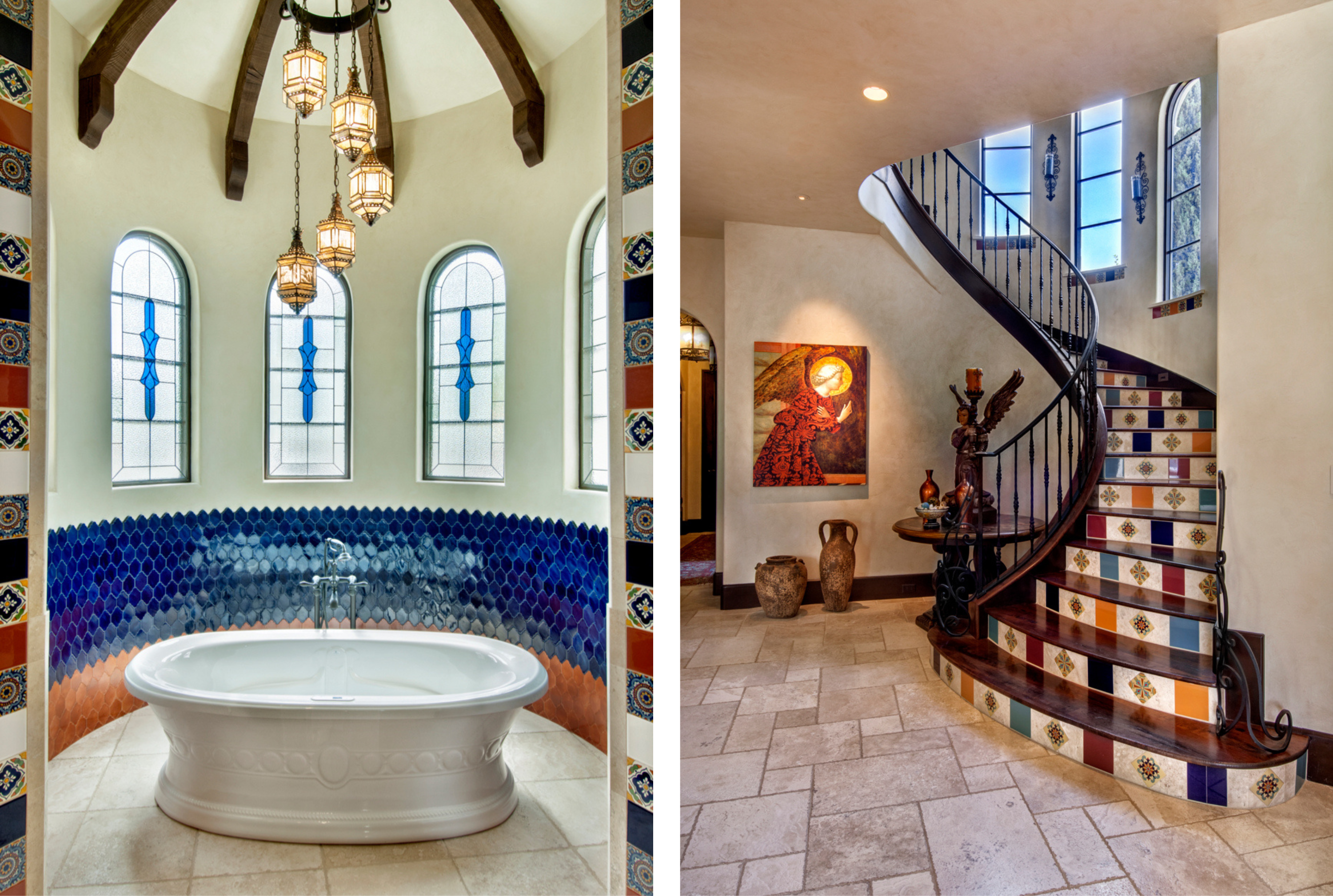
Always order 10-20% extra to allow for specific cuts, breakage, and/or variation. Opt for 20% for diagonal patterns, rooms with complex layouts, or large-format tiles. You always want to order extra overage for handmade custom tile orders or imported tile. You want to avoid waiting 8-10 weeks for your special tile and then not having enough. Overage is also important for natural stone tile or zellige tile, where you may have a wider range of variation or imperfections and want some flexibility to choose what you are or are not comfortable with within that range.
Whatever tile is left over after installation, have your custom builder properly label the remainder and orderly store it in a safe space in your home (i.e., attic or garage).
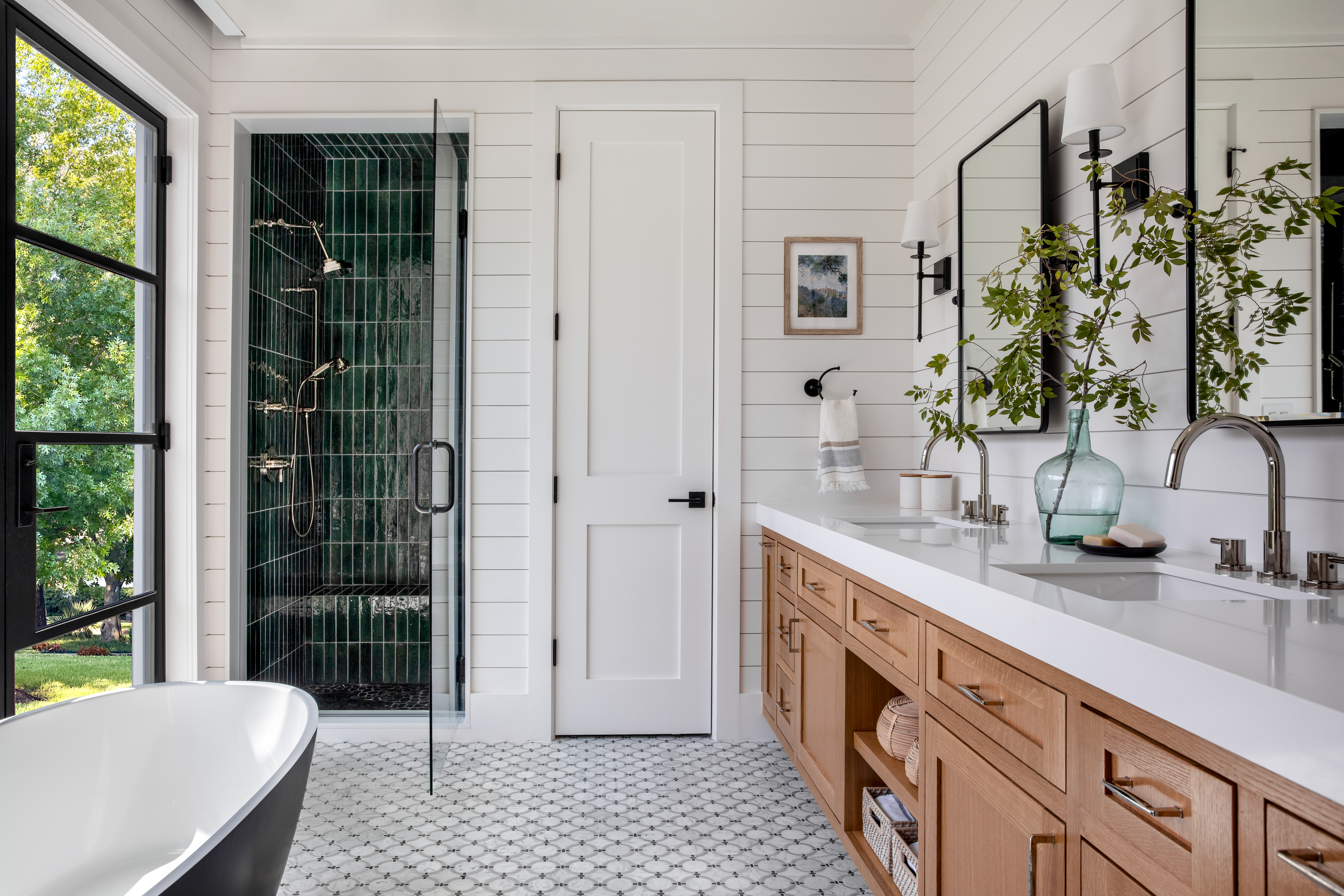
As always, everything that goes into building a custom home (including tile!) must be thoughtfully designed, planned, and executed in order for it to succeed at a high level. THE most important thing you can do to ensure you get the home of your dreams is to partner with a trusted architect, custom builder, and interior designer. That will ensure that these common tile mistakes are indeed avoided… along with MANY others!




COMMENT ON THIS ARTICLE