

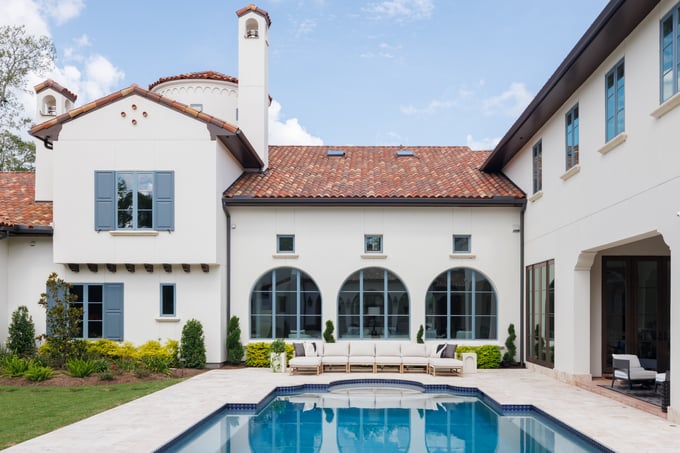
As you can imagine, “what does it cost to build a custom home?” is a very complicated question to answer. We have had the privilege of building homes of all sizes and countless styles throughout our four decades in business, so our homes have ranged in cost from $500,000 to over $20 million.
In addition to the many cost factors that will be discussed in the next section of this blog post, the cost of your custom home will also depend on where in the country (or world) it is being built. Specifically here in Houston, these days we are able to build high-end, truly custom homes for as little as $450/SF and as much as $1,000+/SF. In other parts of the country, labor pricing, site clearing and grading requirements, shipping and freight costs, utility installation, etc., can all vary significantly, affecting the cost of custom homebuilding accordingly.
To achieve the most bang for your buck, you will want to build your team (Architect, Custom Builder, and Interior Designer) very early in the process so that all three partners will collaborate to ensure a home design that fits your family’s aesthetic, lifestyle, AND your desired budget. If an experienced builder is engaged at the start of your architectural design phase, they will work with your architect to ensure that the design and layout of your home is efficient. This will allow you to allocate less of the total cost to the structural/mechanical elements of the home (foundation, framing, drywall, roofing, HVAC, plumbing, exterior material, etc.) and more costs to incorporating the features and finishes you want to make the house truly your home.
In this blog post, we will dive into:
- The factors that influence the cost of custom homes
- The best first steps to take to achieve a custom home that fits within your budget
- The basics of how custom builders create a construction budget
- What questions to consider as you’re reviewing budgets from custom builders
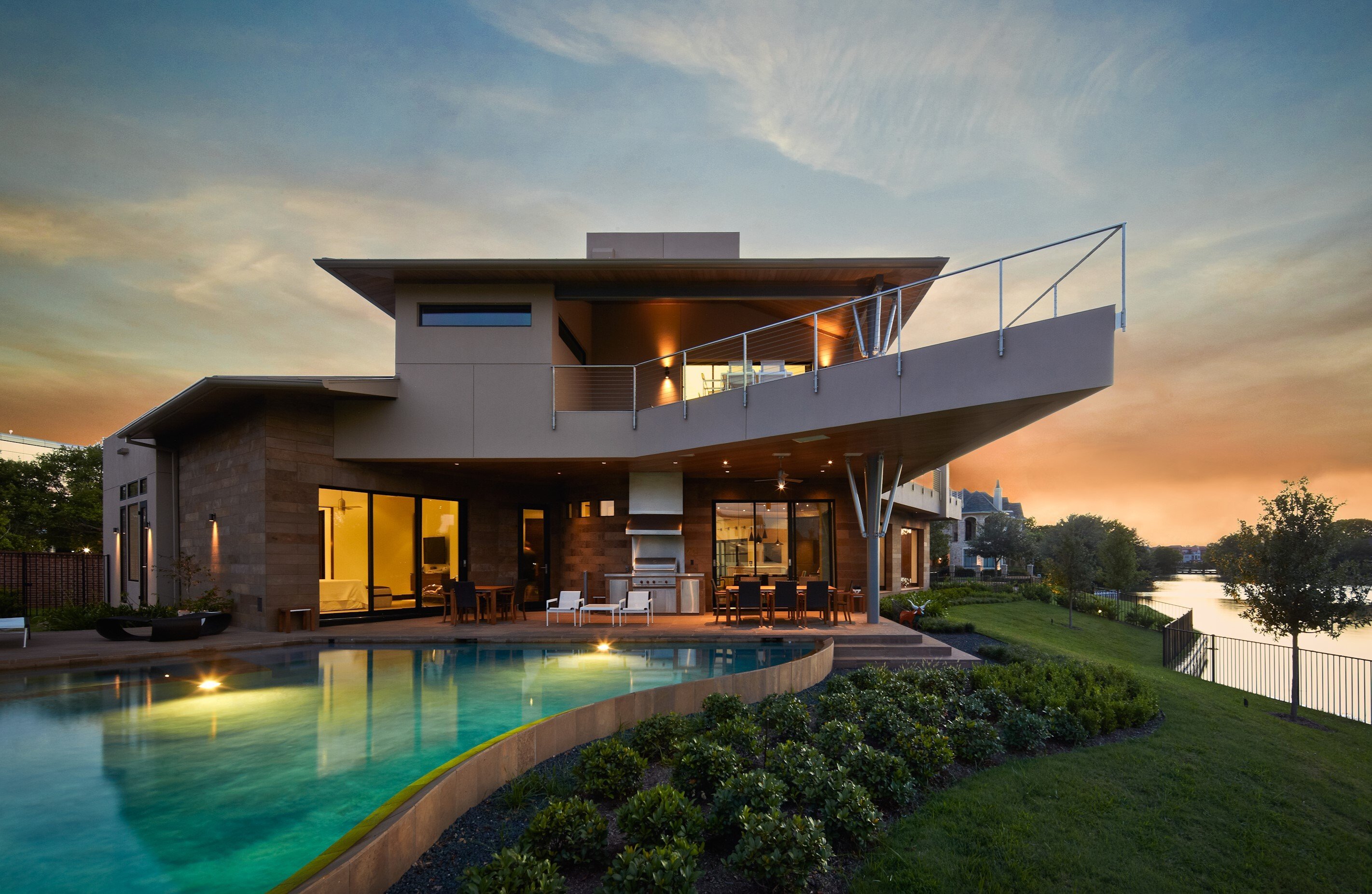
Factors That Influence the Cost of Custom Homes
Custom home construction costs will vary significantly from home to home, depending on the following:
- Size of the home
- Architectural style of the home
- Efficiency of the architectural design (two-story stacked vs. one-story, number of hallways/galleries/nooks/courtyards/etc.)
- Ratio of inexpensive vs. expensive SF in the home (bedrooms vs. bathrooms/kitchens)
- Desired level of finishes in the home (tile, flooring, trim details, countertops, plumbing fixtures, lighting, etc.)
- Costly architectural features in the home (structural steel, fireplaces, technology integration, beams, steel window/door systems, etc.).
- Location (labor pricing & availability, permitting & HOA requirements, etc.)
- Property-specific sitework (excavation, tree removal, erosion control, utility installation, rough grading, etc.)
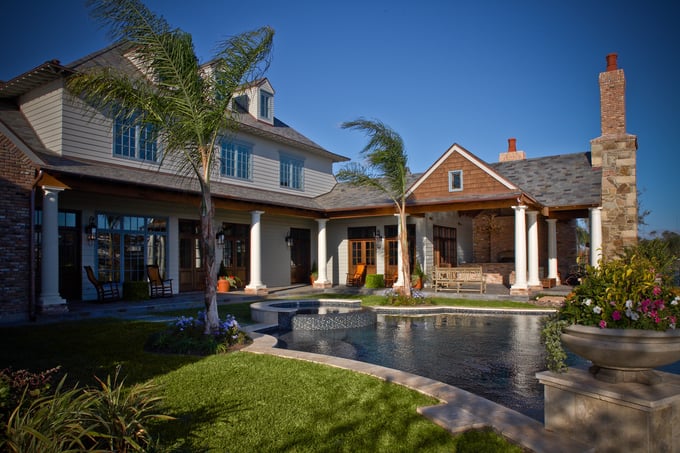
The Best First Step
The best first step to achieve a custom home within your budget is to meet with a highly qualified custom builder like us to discuss your project goals in depth. At this initial meeting, come prepared to share your vision by bringing:
- Your desired budget range
- Information on your lot (address, survey – if available)
- The general size you’d like your home to be
- A list of rooms/spaces/features you’d like your home to have
- Architectural styles you like
- Any inspiration photos that give the custom builder an idea of your design aesthetic and desired level of finishes
If your builder has a long history of building custom homes in your city, they should be able to tell you whether the home you envision is feasible within your desired budget. They should also be able to connect you with architect / interior designer candidates who are well-suited to achieve the specific goals you have for your future home.
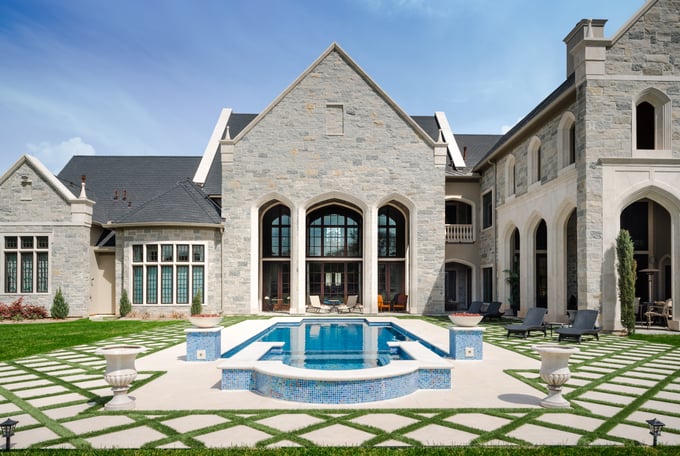
If Your Plans Are Already Finished
If you missed the boat on having your team (architect, builder, interior designer) built at the start of your architectural design phase, here is a bit of information that will help you. Using your completed plans and specifications, you can find out the cost of your future home by having a qualified custom builder (or two) build a comprehensive and accurate budget for you.
Your custom builder candidate(s) should have in-house estimators that study your plans and specs, then gather and thoroughly vet dozens of bids from their wide network of high-value subcontractors in order to produce the most accurate budget possible. If they are detail-oriented like us, then they should shoot for no holes in your budget so that it truly reflects the future cost of your home. The goal is no gotchas or costly surprises down the road.
Budget Basics
The first thing to know about custom home budgets is that you are NEVER comparing apples to apples. There are so many variables that go into creating comprehensive and accurate budgets for one-of-a-kind homes. You’ll want to take time to evaluate whether your builder has put in the due diligence required to succeed at this.
Also, remember that the more selections you make before bidding, the more comprehensive the budget can be. More selections will lead to fewer assumptions made by the builder and fewer allowance items placed in the budget.
There are a few ways builders approach creating a budget for a custom home:
1. Use multiple bids and historical data
This is the most accurate way to estimate how much a specific architectural plan will cost to build. Once plans and specifications are finalized, your builder should be willing to devote the time and expertise needed to give you a truly accurate picture of what it will cost to build your home. This is achieved by soliciting and thoroughly vetting hard bids from their network of subcontractors, checking those numbers against historical project costs, and creating a detailed itemized budget. An extraordinary amount of time, resources, and experience goes into creating a comprehensive custom home budget, which is why some builders look for ways to cut corners, as in the following two approaches.
2. Use historical data only
While it is acceptable to use historical data to build a preliminary estimate that will guide the architectural design phase, it will not suffice in building a comprehensive final budget for a truly custom home.
3. Outsource budget creation to a third-party estimating firm
If one of your builder candidates uses this approach, RUN. This indicates they lack one or several of the following: a commitment to dig in and analyze your architectural plans, the historical data needed to verify bid numbers or create a truly comprehensive budget, a wide subcontractor base to reach out to for quality bids, the manpower needed to create a meaningful and accurate budget, and a commitment to be the best possible steward of your resources.
Budget Presentation Meetings
In order to evaluate how thorough and accurate your custom builder’s budget is, we strongly advise scheduling a face-to-face budget presentation meeting with them. It is important to review the budget together, understand and clarify assumptions that were made in order to price out specific budget line items, and discuss the many options that are available to you in order to shape the budget further. From a broader perspective, this meeting also allows you to assess their communication style, attention to detail, and expertise.
During this meeting, you will want to keep in mind the following questions:
How well has the builder studied and learned your architectural plans?
The more they’ve scrutinized your plans, the higher confidence you can have that they’ve caught all of the tricky elements of your home design and included them in the budget.
Did they share with you the assumptions they used to create your budget?
Because custom homes involve hundreds of details, big and small, it is inevitable that not everything will be spelled out on your architectural design or specifications. As a result, the builder will make dozens of assumptions in order to arrive at various budget numbers. It’s important that they take this opportunity to share those with you and gain clarity on which of those assumptions should be refined to make the budget more accurate.
Did they get multiple bids from high-value subcontractors for major line items?
Specifically, the builder should prioritize getting multiple bids for foundation, roofing, plumbing, electrical, HVAC, windows, as well as exterior and interior doors. Their willingness to go through the time-intensive exercise of soliciting and thoroughly vetting multiple bids shows you many things: how vast their network of quality subcontractors is, how much they value your resources, how detail-oriented and thorough they are in their operations, and how committed they are to providing you exceptional service and value, both now and throughout construction.
Do they scrutinize every bid to make sure it is comprehensive?
Holes in subcontractor bids at this point could result in costly change orders, budget busts, and schedule delays down the line.
Did they plug in low-quality subcontractors simply to win your project?
A budget made up of bids from low-quality subcontractors might be easy on the eyes, but it won’t end up being easy on the wallet. Using low-quality subs can lead to substandard workmanship, more mistakes during construction, cascading schedule delays, and more warranty issues after move-in.
Did they provide you with options when you met to review their budget
The hundreds of details mentioned above each have multiple ways to go about implementing them. A good custom builder will take this opportunity to dive deeper into understanding your priorities and which options you would like to incorporate.
Did they explain and justify all amounts for allowance items?
Because allowance items are simply plug-in numbers, you will want to understand how the builder arrived at each one. Hopefully, their allowance amounts are based on realistic estimates of what a particular line item might cost, but this may not always be the case if a builder is more concerned with winning your business than providing you a realistic budget. There may be some adjustments made during your budget presentation meeting as the builder gains a deeper understanding of your desired level of finishes.
Did they use historical data for similar homes they’ve built to verify numbers in their budget? Not only is this good for your budget, it’s also indicative of how much experience they have building homes like yours. You never want your home to be a builder’s guinea pig.
Looking for additional questions to ask during your custom builder interviews? Visit our previous blog post here.
Although the question of “what does it cost to build a custom home?” is difficult to answer, we hope this blog post has been helpful to you. Both in understanding the many factors that influence the potential cost of your custom home and in understanding the basics of creating and evaluating custom builder budgets.
As you proceed with your custom homebuilding journey, remember to lean on your custom builder for expertise and guidance. Part of their role during all phases of your project is to be your trusted advisor, and they should treat that charge with the utmost care.




COMMENT ON THIS ARTICLE